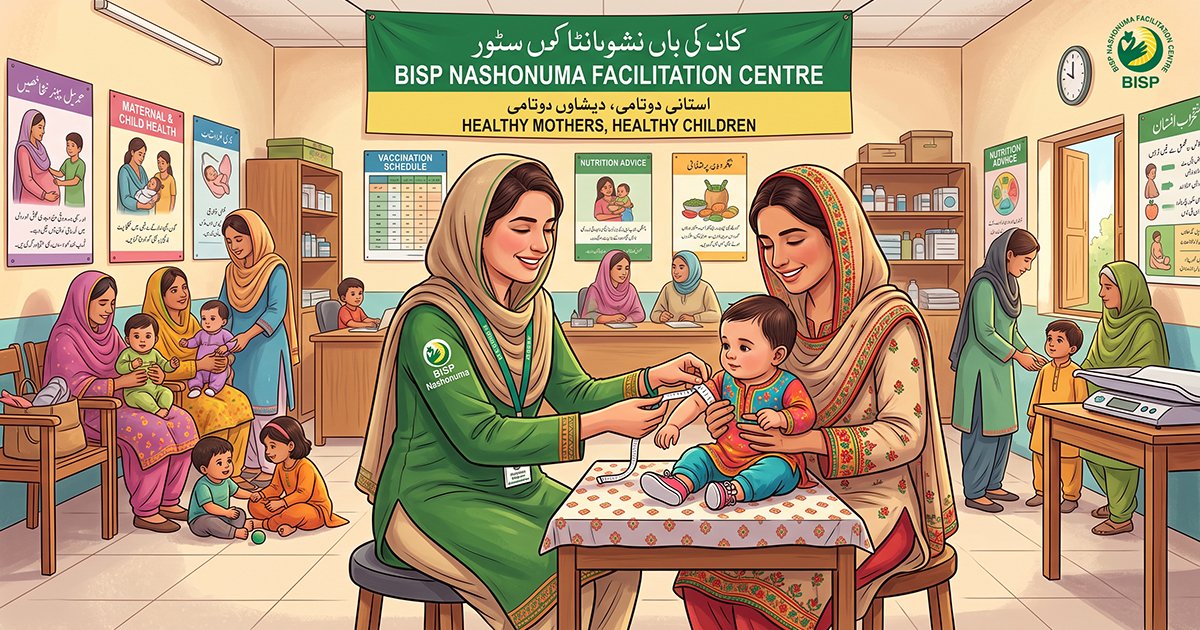
Benazir Nashonuma Program: Eligibility & Registration Guide (2026)
While most searches around 8171 focus on the core Kafalat cash transfer, the Benazir Nashonuma Program is a separate, targeted initiative aimed at mothers and young children during the most critical window of early development. This 2026 guide explains Nashonuma program eligibility in plain language, walks through Nashonuma registration step by step, and shows how your record links back to the 8171 portal.
What Is the Benazir Nashonuma Program?
Launched in 2020, the Benazir Nashonuma Program was designed to tackle chronic malnutrition and stunting among Pakistan’s most vulnerable mothers and young children, focusing on what health experts call the first 1,000 days of a child’s life — from pregnancy through age two.
The programme operates through government-run Facilitation Centres located at tehsil or district headquarter hospitals, delivered with technical support from organisations including the World Food Programme, WHO and UNICEF. It combines conditional cash transfers with nutrition-sensitive interventions:
- Specialised nutritious food for pregnant and lactating women and their children
- Regular health checkups including antenatal visits and growth monitoring
- Immunisation support for children in the covered age range
- Cash assistance paid quarterly, conditional on attending required health visits
Independent evaluations have found measurably lower rates of stunting among children who took part in the scheme compared with those who did not, making it one of the more evidence-backed parts of Pakistan’s social safety net. Official programme details are published on the BISP website.
Nashonuma Program Eligibility: Who Qualifies in 2026
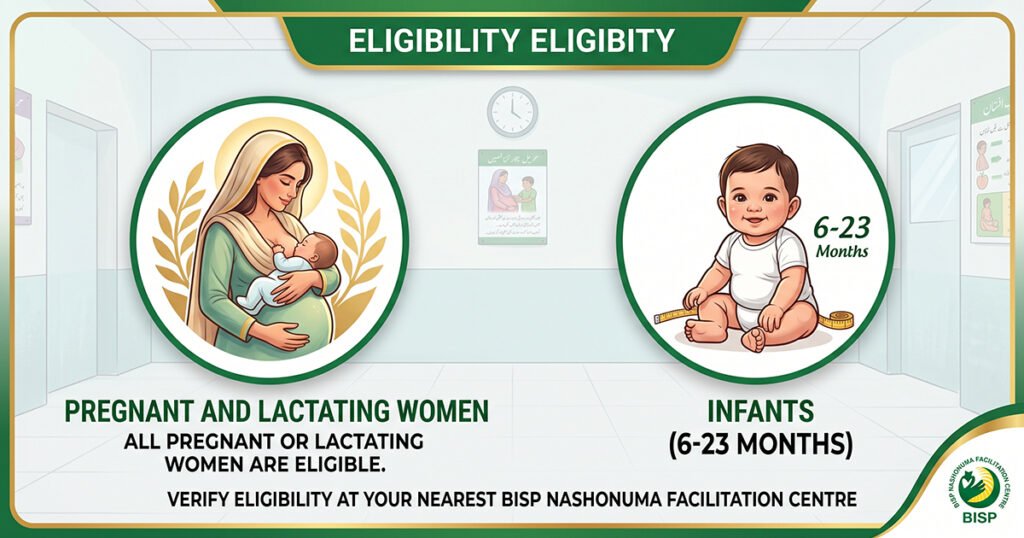
Nashonuma program eligibility centres on two specific groups rather than general household poverty status:
- Pregnant and lactating women (PLW) — women who are currently pregnant or breastfeeding
- Children aged 6 to 23 months — infants and toddlers inside this specific age window
Beyond the category itself, Benazir Nashonuma Program eligibility is generally tied to being part of a household already registered with BISP, because enrollment checks CNIC details against the existing NSER database. In some regions an additional poverty score threshold applies on top of the general Kafalat criteria — our guide to what the PMT score means in BISP explains how that number is worked out.
Because the programme targets a life stage rather than a fixed household characteristic, Eligibility for it can start or end depending on where a woman or child currently sits in that window. A household does not need to reapply for base Kafalat status to access this support if a new pregnancy or birth occurs.
Nashonuma Program Eligibility Checklist
- Pregnant or breastfeeding woman, or a child aged 6–23 months
- Valid CNIC for the mother and a B-form for the child
- Household present in the NSER database
- Able to attend the scheduled antenatal and growth-monitoring visits
- Living within reach of a designated Facilitation Centre
If your household is missing from NSER, complete a BISP dynamic survey first — eligibility cannot be confirmed without a current record.
Nashonuma Registration: How to Enroll Step by Step
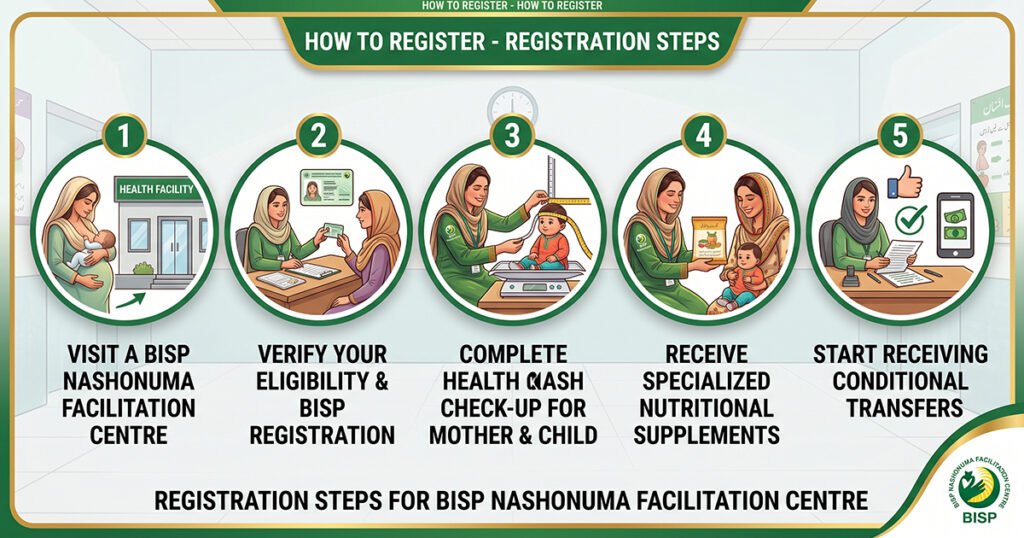
Nashonuma registration involves an in-person visit rather than a purely online process, because medical verification is part of enrollment. Here is the general flow:
- Locate your nearest Facilitation Centre, usually based at a tehsil or district headquarters hospital. Enrollment is only completed at these centres.
- Bring identification and medical proof. A pregnant woman needs her CNIC plus pregnancy confirmation and a vaccination record such as the TT vaccine. For an infant, the child’s B-form and immunisation card are normally required.
- Complete identity verification. Centre staff check the CNIC against the NSER database and confirm Nashonuma program eligibility on the spot.
- Attend the required health visits. The cash component is conditional, so ongoing enrollment depends on keeping antenatal checkups, growth monitoring and immunisation appointments.
- Receive supplements and cash assistance on the quarterly schedule, provided those health visits are kept up.
Documents Needed for Nashonuma Registration
Bring the following to your registration appointment:
- Original CNIC of the mother
- Pregnancy confirmation slip and TT vaccination record
- The child’s B-form and immunisation card, where a child is being enrolled
- An active mobile number registered on the same CNIC
Cash paid under the Benazir Nashonuma Program is separate from the regular Kafalat stipend, so a household can receive both if it qualifies for each independently. See the current BISP installment amount and payment schedule for 2026 for the Kafalat side of that.
Payment Amounts and Quarterly Schedule in 2026
The cash side of this scheme is paid every three months and is deliberately split by category, because the intended outcome differs between a mother and a young child. Amounts are revised by the federal government from time to time, so treat any figure you see on social media with caution and confirm it at the centre where you enrolled.
- Pregnant and lactating women receive a quarterly stipend on top of any Kafalat payment the household already gets.
- Boys aged 6 to 23 months receive a quarterly stipend once growth monitoring visits are recorded.
- Girls aged 6 to 23 months receive a slightly higher quarterly stipend, a deliberate incentive built into the design of the scheme.
- Specialised nutritional supplements are handed over at the centre itself and are not converted into cash.
Payments are released only after the required health visits for that quarter are logged. If a visit is missed, the instalment for that period can be withheld until the record is brought up to date, which is the single most common reason families report a missing payment. Collection happens through the same payment partners and campsites used for the wider BISP disbursement cycle, so the withdrawal experience is familiar to anyone already receiving Kafalat.
Is It Worth Enrolling?
For a household already inside the BISP system, the answer is usually yes. The stipend is modest on its own, but it arrives alongside free supplements, structured antenatal care and growth monitoring that many rural families would otherwise pay for or skip entirely. The measured reduction in stunting rates among participating children is the strongest argument for making the trip to a centre during pregnancy rather than after the birth.
How the Benazir Nashonuma Program Connects to the 8171 Portal
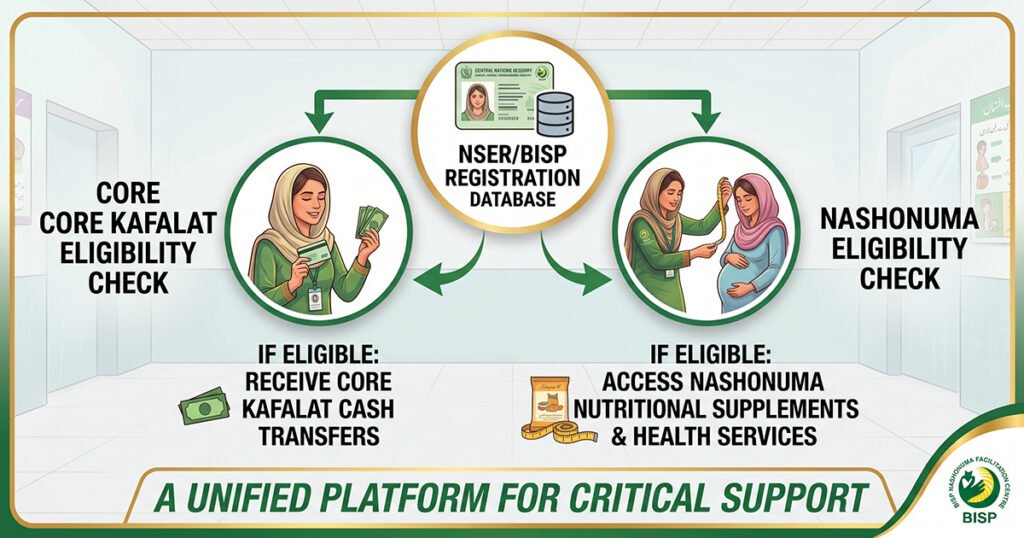
The scheme is not checked through a completely separate system — it sits alongside your existing BISP record. A few practical points:
- 8171 confirms your core status. A check on the 8171 web portal tells you your household’s Kafalat status, but Nashonuma registration is confirmed at the Facilitation Centre rather than through the standard 8171 check alone.
- NSER data underpins both programmes. Nashonuma program eligibility pulls from the same registry used for core BISP eligibility, so keeping your household record current supports smoother enrollment either way.
- The naming survived the rebrand. Our BISP Kafalat vs Ehsaas Kafalat explainer covers what changed in 2026 — the structure of this scheme was not affected by the branding shift.
- Payment problems are handled separately. If a quarterly payment does not arrive, our guide on what to do when a BISP 8171 payment is not received applies to this cash too.
Common Nashonuma Registration Mistakes to Avoid
- Assuming it is automatic. Meeting Nashonuma program eligibility does not enroll you — enrollment still has to be done in person at a centre.
- Missing health visits. The cash is conditional, and skipped appointments pause payments.
- An outdated CNIC or mobile number. Both are checked during Nashonuma registration.
- Waiting until the child is too old. The window closes at 23 months, so start Nashonuma registration early.
- Confusing it with Kafalat. The Benazir Nashonuma Program is a top-up, not a replacement.
Checking Benazir Nashonuma Program eligibility early in a pregnancy gives the best chance of receiving the full package of support, and completing Nashonuma registration on time keeps the quarterly payments running without interruption.
4 thoughts on “Benazir Nashonuma Program: Eligibility & Registration Guide (2026)”